Dispatch from the Global Risk and Stabilization Summit
In October, Renaissance Philanthropy organized the Global Risk and Stabilization Summit in Reykjavik, Iceland. The intent was to help create and coalesce the field of ‘Earth systems stabilization’.
The summit was incredible, thanks to its ambitious scope and the impressive attendee list. I was honored to be invited to represent the planetary sunshade concept in general, and in particular our organization’s work on the ARIA-funded Space Reflector Baseline Survey. I was eager to hear how the community was digesting the report, as well as, to connect with new funders and collaborators. An unexpected win was my visit to the Icelandic Parliament to speak with MPs about climate stabilization.
A Summit for Planetary Risks and Stabilization
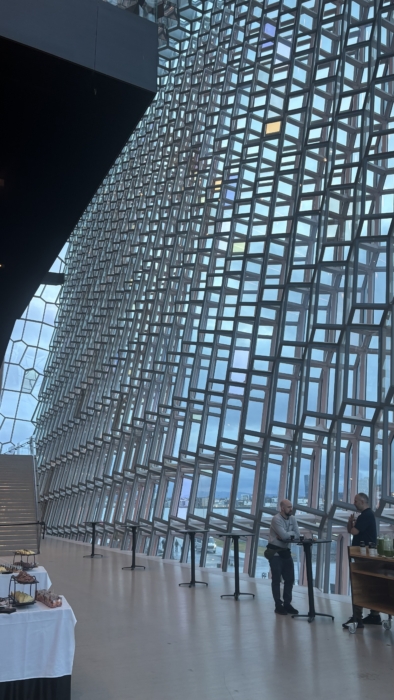
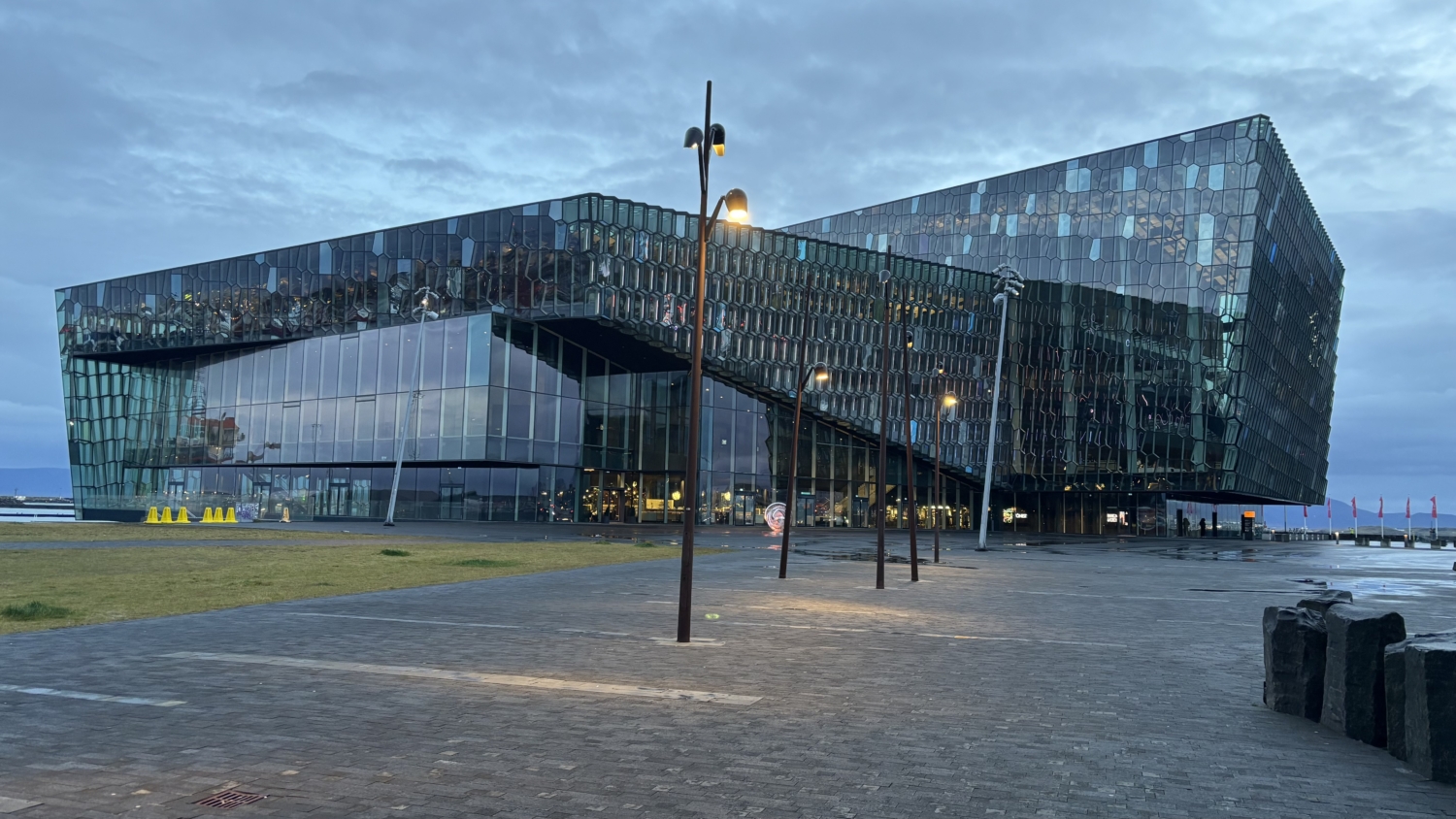
The Summit was held at the Harpa convention center in downtown Reykjavik. The building features a distinctive colored glass façade inspired by the basalt landscape of Iceland.
In order to establish the field of Earth systems stabilization, the summit first had to define what it meant by ‘the field’. While most of the meetings I’ve attended for sunshade work have been specific to SRM (alternatively called geoengineering, climate intervention, climate stabilization, etc.), this summit started with a wider frame. In addition to SRM researchers, Renaissance Philanthropy included people working on biosphere systems, ocean systems (including marine CDR), local reflectivity, and more. The extra breadth meant that some very near-term activities which are currently underway were part of the mix, and that allowed practitioners to mingle with people working on interventions which are still years away from any outdoor experiments.
This wide scope felt important because all of these areas of work face common challenges. They are all proposing to ‘do things’ to natural systems with the intention of stabilizing them, but the ‘doing’ risks unintended consequences, and the pathway to approval for even small tests is almost always unclear. However, all of these interventions spring from the observation that destabilization is happening faster than most scientists expected, and therefore the stakes are high.
In addition to people studying the risks and investigating interventions, the Summit also brought together the people doing the other things that enable fields to happen: coordinators of scientific networks, philanthropic funders, investors, and risk managers, to name a few. This made me realize how complex the funding landscape can be. A big insight was how complex the various forms of capital are and what sorts of conditions might lead them to be deployed. Relatedly, I spent a lot of time talking to actuaries – professionals dedicated to assessing and managing risks. The organization Planetary Solvency hosted a pre-event, and we looking for ways to collaborate.
The most profound interaction I had was with two members of the Earth Elders, who were there to learn more about how to protect Earth’s systems, but also because the field needs to be grounded in wisdom. I couldn’t agree more.
Visiting the Icelandic Parliament
On the second day of the summit, I was invited to join a small group to go tour The Althing, the world’s oldest legislature in the world. Notably, last year Iceland declared the potential collapse of the the Atlantic Meridional Overturning Circulation (AMOC) a national security risk. (The AMOC is a system of ocean currents that circulates water in the Atlantic Ocean, carrying warm water north and cold water south, and there is strong evidence that this is slowing down, which would lead to a very frozen Iceland, Scandinavia and UK.) Iceland is paying attention.
Our tour was organized by Páll Gunnarsson of the Reykjavik Institute, whose efforts were instrumental in bringing the nation’s emergency declaration. Critically, the declaration did not only call for study of the issue, it also explicitly instructed the government to explore ways to prevent the collapse from happening.
We were guided by the youngest member of parliament, an engineer named Ingvar Þóroddsson. And we met with María Rut Kristinsdóttir, the chair of the Environment and Communications Committee.
Our small party included a veteran US State Department negotiator, a leading NGO researching stratospheric aerosols, a leading private company developing stratospheric aerosols, a funder in the Earth systems stabilization field, and myself. Without getting into that much depth we each shared the work we are doing to try and avoid climate tipping points like the AMOC collapse. And we thanked the MPs for being part of that conversation.
It is unclear what the next steps are for Iceland. It is a small country, with about 400,000 residents and a GDP comparable to Vermont or Wyoming, and not about to launch a major research program. However, Iceland has joined with other Nordic countries to look at the AMOC collapse, and our international system gives a large voice to nation states who are seeking to take action.
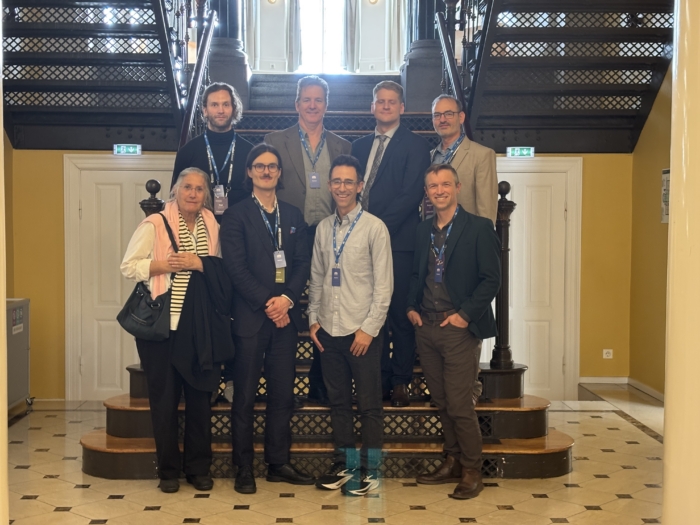
Visiting The Alting, the oldest parliamentary body in the world.
In Conclusion
As climate impacts accelerate, and we learn more about how quickly the Earth systems we rely on are destabilizing, governments will become more interested in climate security. The Global Risk and Stabilization Summit, and the visit to the Althing, are important steps forward in ensuring the emerging consensus of responding to climate overshoot, is coherent and grounded in reality.
I encourage all people concerned about climate, and especially people working on specific interventions like sunshades, to learn about the complementary efforts underway for Earth systems. Our ability to align on a coherent vision for the future depends on it.